1. The Paradigm Shift: From Search Results to Synthesized Answers
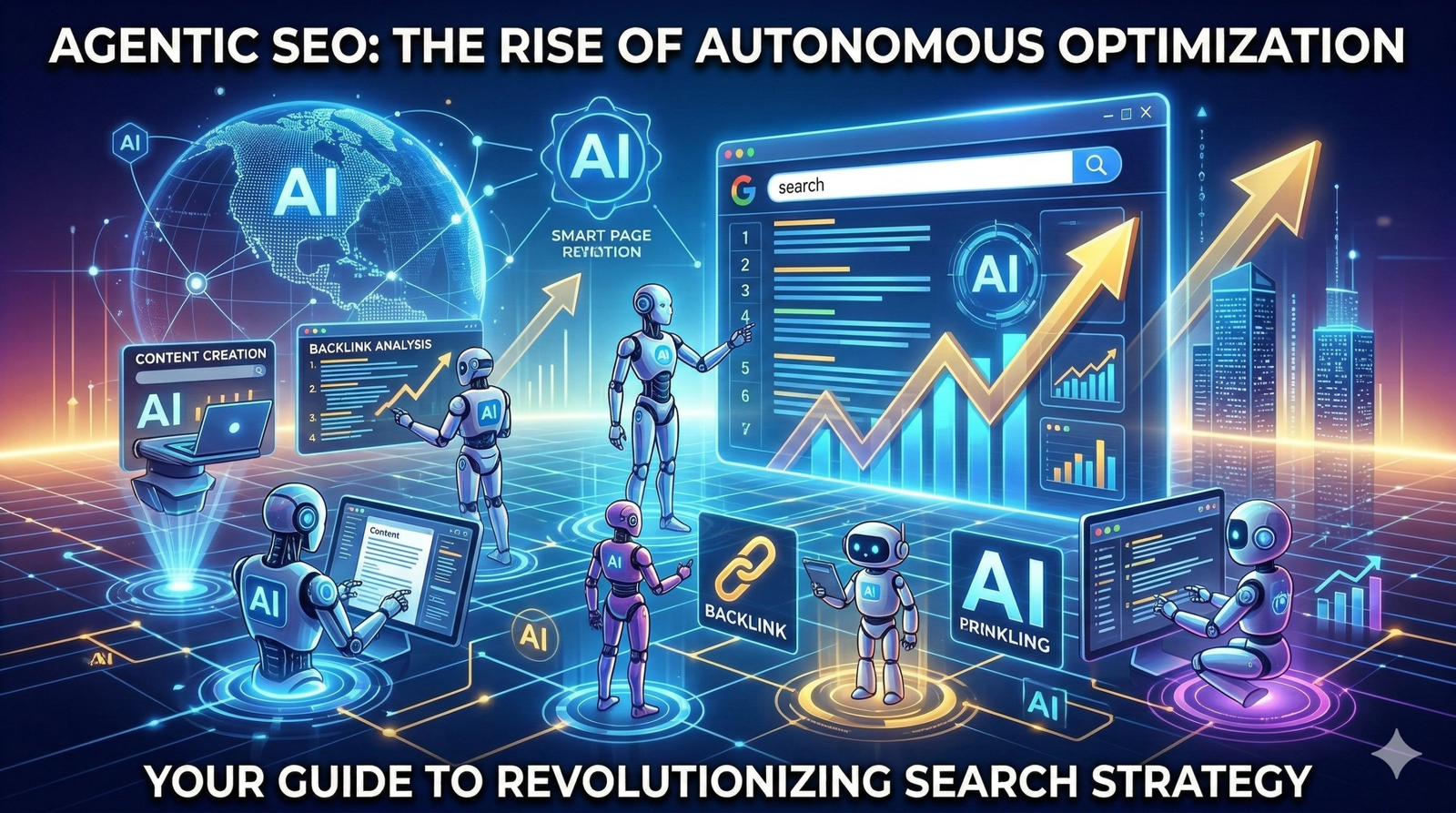
The digital landscape is shifting from a library of “blue links” to a grid of “intelligent answers.” For two decades, Search Engine Optimization (SEO) was about getting a user to click a link and visit a page. In the era of Answer Engine Optimization (AEO) and Generative Engine Optimization (GEO), the “click” is no longer the primary unit of value. Instead, success is defined by becoming the synthesized response that an AI agent provides directly to the user.
| Feature | Traditional SEO (The Page Search) | AEO/GEO (The Answer Search) |
| Primary Goal | Rank high in a list of website links to drive clicks. | Become the cited source synthesized into a direct AI response. |
| Content Focus | Full web pages, site architecture, and keyword density. | High-value “answer-ready” content chunks and data density. |
| How Results Appear | A list of multiple site titles and meta-descriptions. | A single, cohesive answer with embedded citations and links. |
| User Interaction | User clicks and explores various external sites. | User receives an immediate answer without leaving the chat interface. |
While traditional search acts as a middleman pointing toward destinations, AI agents act as synthesized layers that interpret intent to provide a finished conclusion.
2. Step 1: Deconstruction—Breaking the Prompt into Task-Specific Units
When a user provides a conversational prompt, a modern AI agent doesn’t just scan for keywords. It treats the prompt as a complex engineering problem to be deconstructed into “focused searches” or sub-tasks.
Consider the prompt: “I want an acoustic guitar under $1,000, great for fingerpicking, easy for beginners, and made from sustainable materials.” A traditional engine might return pages that match a few of these words. An agentic engine, however, layers information by deconstructing the prompt into four units:
- Task A: Identify the top-rated acoustic guitars within the sub-$1,000 price bracket.
- Task B: Filter those guitars for technical specifications optimized for fingerstyle playing (e.g., wider nut width).
- Task C: Cross-reference user reviews and expert guides to find which models are designated “beginner-friendly.”
- Task D: Verify the manufacturing credentials against a list of verified sustainable timber brands.
Once these tasks are defined, the agent must move from planning to retrieval, seeking “answer-ready” content that can fulfill these specific requirements.
3. Step 2: Retrieval and Grounding—The Search for “Answer-Ready” Content
To avoid “hallucinations,” agents use Retrieval-Augmented Generation (RAG) to ground their answers in live web data. For your content to be extracted during this phase, it must emit strong AEO signals that agents prioritize:
- Chunk-Level Structure: Agents extract specific passages, not whole pages. Content must be organized into clear, standalone sections that remain coherent even when removed from the page.
- Fact-Density: Agents favor verifiable evidence. GEO-bench research proves that adding Quotation Addition provides a 41% lift in inclusion, while Statistics Addition provides a 28% lift in subjective impression.
- Entity Clarity: Use unambiguous terminology. Explicitly name the “entity” (the specific guitar model or brand) so the agent’s “Knowledge Graph” can connect your data to other trusted sources without confusion.
To maximize agentic extraction, adopt the “inverted pyramid” style: lead each section with the most critical fact or answer in the first 100 words. Supporting details and context should follow. This allows the agent to “grasp” the core value of your content immediately during its scan.
Once the facts are retrieved, the agent must verify the credibility of the providers involved through “Entity Resolution.”
4. Step 3: Identity Intelligence—Verifying the Entities Involved
At the center of any high-stakes transaction is Agentic Entity Resolution (ER). This is a specialized layer of “Identity Intelligence Infrastructure” that ensures the agent knows exactly who it is dealing with. ER answers two core questions: “Who is who?” and “Who is related to whom?”
To maintain pace with autonomous agents, an ER system—like Senzing—requires a sub-second startup and operates with no training or fine-tuning required. This “Hybrid Advantage” allows for two essential modes of operation:
- Dynamic Entity Resolution: This is “just-in-time” resolution. The agent resolves entities in memory for a specific, ephemeral task—such as checking for fraud in a single transaction—without needing a permanent database.
- Persistent Entity Resolution: This builds an Entity-Resolved Knowledge Graph (ERKG). It maintains a long-term, self-correcting view of an entity’s identity, allowing agents to understand complex relationships (like beneficial ownership or householding) across billions of records.
The result is “Identity Intelligence” that allows agents to operate with high confidence and full attribution, ensuring the transaction is trustworthy and compliant.
5. Step 4: The Agentic Commerce Protocol (ACP) and Instant Checkout
The Agentic Commerce Protocol (ACP) is an open standard that allows discovery and purchase to merge into a single, seamless conversational layer. It enables “Delegated Payments,” where an agent acts on the user’s behalf to complete a transaction without the user ever leaving the chat interface.
The “Instant Checkout” narrative follows a 4-step sequence:
- Discovery: The agent surfaces specific product options from clean, API-accessible catalogs based on the user’s intent.
- Selection: The user chooses a preferred item within the chat window.
- Agentic Checkout: The agent facilitates the payment using a shared payment token API (via partners like Stripe). The user’s payment credentials stay secure while the transaction is authorized.
- Fulfillment: The order is sent directly to the merchant’s system for shipping and inventory management, while the agent provides a confirmation to the user.
To manage these complex multi-tool workflows efficiently, the agent must optimize its context window to ensure it doesn’t lose track of the mission.
6. Step 5: Optimization with MCP—The “Code Mode” Efficiency
To prevent “context window overload,” we use the Model Context Protocol (MCP). Think of MCP as the “USB-C port” for AI. Just as USB-C provides a standardized way to connect any device, MCP provides a universal standard to connect agents to tools and data.
The breakthrough here is “Code Mode.” In traditional “Direct Tool Calling,” an agent must load the entire manual for every tool it might use, which bloats the context window. In Code Mode, the agent uses Progressive Disclosure: it writes code to interact with tools (like Salesforce or a bank API) and only “reads” the tool definition file when it is specifically needed.
- Token Efficiency: This approach can lead to a 98.7% token reduction compared to Direct Tool Calling, as intermediate data stays in the execution environment and never enters the LLM’s main context.
- Privacy & Speed: Because intermediate data is filtered in the “Code Mode” environment, sensitive data stays private, and the agent avoids “time to first token” latency.
Once this infrastructure is in place, brands can measure the effectiveness of the lifecycle through specific, agent-centric metrics.
7. Measuring Success: The 3 Core KPIs for the Agentic Era
In a world where clicks are disappearing, we must measure “Agentic Readiness.” Success is calculated against a “Brand Canon”—a rubric of your mission statements, core values, and factual baselines that acts as the “ground truth” for the AI.
| Metric | Name | Definition | Why It Matters |
| 1 | AI Signal Rate (Be Seen) | The frequency your brand is mentioned in AI answers for your category. | Replaces “impressions” as the primary measure of brand awareness. |
| 2 | Answer Accuracy Rate (Be Believed) | How accurately the AI represents your brand compared to your Brand Canon. | Measures if the AI is hallucinating or eroding your brand trust. |
| 3 | AI Influenced Conversion Rate (Be Chosen) | The rate at which AI-driven interactions result in a completed transaction. | Connects AI visibility directly to business impact and CFO-level outcomes. |
Ultimately, a brand must be consistently seen, accurately believed, and frictionless to be chosen.
8. Conclusion: The Future of Frictionless Discovery
As we look toward 2026, “Agentic Readiness” will separate market leaders from those left behind. Discovery, identity verification, and checkout are no longer separate stages; they are a single, autonomous conversation. Brands that expose their data clearly and securely to agents will capture the “zero-click” economy.
Learner’s Checklist: Four Steps to Agentic Readiness
- [ ] Clean Catalogs: Audit and structure your product data for AI parsing—ensuring stock, variants, and metadata are hygiene-checked.
- [ ] API Exposure: Make your product feeds and data endpoints (REST/GraphQL) accessible to AI agents via ACP-compatible protocols.
- [ ] Trust Signal Reinforcement: Build “E-E-A-T” through verified author bios, expert citations, and structured data to ensure agents cite you.
- [ ] Audit for Grounding: Ensure your content provides the fact-density (specific quotes and statistics) that GEO research proves agents require for inclusion.
Leave a Reply