A practical breakdown of Gartner’s 2025 cybersecurity roadmap—covering AI risk, culture change, governance, and dynamic security programs.
Table of Contents
Why Cybersecurity Leadership Must Change in 2025
Cybersecurity is no longer just an IT responsibility. It is now a business risk issue.
According to Gartner’s 2025 Strategic Roadmap for Cybersecurity Leadership , most cybersecurity functions still struggle to adapt their strategies when business objectives shift. Only 60% significantly change strategy in response to evolving business needs.
This gap is dangerous.
Digital transformation, distributed technology ownership, cloud-native architectures, and generative AI (GenAI) adoption are reshaping enterprise risk. Security leaders must move from gatekeepers to strategic enablers.
The Current State: Why Most Security Programs Fall Short
Gartner identifies five recurring weaknesses.
1️⃣ The Silo Problem
Many security teams operate separately from business units. Historically, security was embedded inside IT departments, reinforcing the perception that security is a technical issue—not a strategic one.
However, when lines of business acquire their own technologies (SaaS, AI tools, cloud infrastructure), centralized control weakens. Security must shift toward collaborative risk governance.
This aligns with guidance from the U.S. National Institute of Standards and Technology (NIST), which emphasizes enterprise-wide risk management in its Cybersecurity Framework (NIST CSF 2.0).
2️⃣ Static Security in a Dynamic World
Traditional “waterfall” planning models rely on annual assessments and fixed controls. But threat landscapes evolve weekly.
The Verizon 2023 Data Breach Investigations Report found that 68% of breaches involved a human element, and attackers increasingly exploit supply chains and misconfigurations.
A static program cannot respond quickly enough.
3️⃣ Unstructured GenAI Adoption
Business units often adopt GenAI tools for productivity gains. Employees experiment with AI platforms before policies exist.
Without governance:
- Sensitive data may be exposed
- Model outputs may introduce compliance risks
- Intellectual property leakage becomes possible
Gartner recommends AI TRiSM (Trust, Risk and Security Management)—a framework ensuring AI systems are secure, explainable, and governed.
This aligns with emerging regulatory efforts such as the EU AI Act and NIST’s AI Risk Management Framework (AI RMF).
4️⃣ Awareness Training Without Behavior Change
Perhaps the most striking insight:
Gartner research cited in the report shows that 93% of employees performing unsecured actions already knew their behavior increased risk .
This means awareness alone is ineffective.
Compliance metrics (training completion rates, phishing simulation clicks) measure participation—not behavioral transformation.
True security culture requires:
- Behavioral science principles
- Leadership accountability
- Embedded practices in workflows
5️⃣ Tool Sprawl and Security Complexity
Many organizations accumulate overlapping security tools.
This creates:
- Operational inefficiency
- Increased costs
- Analyst fatigue
- Integration complexity
The roadmap emphasizes platform rationalization and maximizing existing capabilities before acquiring new technologies.
The Future State: Five Strategic Goals
1️⃣ Security as a Business Enabler
Security must align with business objectives.
This requires:
- Clear role definitions (e.g., RASCI matrices)
- Cross-functional steering committees
- Executive sponsorship
Security leaders should guide decisions—not block them.
2️⃣ A Dynamic Security Program
The report highlights:
- Continuous environmental scanning
- Scenario planning
- Embedded risk management
- Agile governance
A dynamic program must:
- Have executive mandate
- Align with defined risk appetite
- Support digital strategy
- Be capable of rapid adjustment
This mirrors principles found in ISO 27001:2022, which emphasizes continuous improvement.
3️⃣ Safe GenAI Adoption
The future state includes:
- AI security governance frameworks
- Formal AI security policies
- Monitoring AI systems for drift and misuse
- AI-specific application security
This is especially relevant for:
- Universities adopting AI-assisted research
- Public sector agencies deploying citizen-facing chatbots
- SMBs integrating AI into CRM or marketing systems
4️⃣ Security Culture Transformation
The roadmap advocates a multi-year behavioral program—not one-off training.
Future-state characteristics include:
- Behavior-centric metrics
- Manager accountability
- Embedded secure habits
- Cultural reinforcement mechanisms
Security becomes part of “how we work.”
5️⃣ Effective Security Tool Selection
The goal is a minimum effective toolset.
This means:
- Conduct capability maturity assessments
- Perform control maturity benchmarking
- Rationalize overlapping tools
- Optimize vendor relationships
Maturity Assessments: The Foundation
Gartner proposes two tools:
- IT Score for Security and Risk Management (Capability Maturity)
- Cybersecurity Controls Assessment (Control Maturity)
Together, they evaluate:
- Governance
- Operations
- Data protection
- Identity and access management
- Application security
- Workforce strategy
Assessment results prioritize gaps based on:
- Maturity
- Importance
- Benchmarking
This structured approach prevents reactive spending.
Migration Plan: Priority Actions
Higher Priority
- Adapt the security operating model
- Establish secure AI practices
- Formalize governance
Medium Priority
- Make the security program dynamic
- Redesign awareness initiatives
Long-Term
- Optimize and rationalize tool selection
Critical Evaluation
Strengths of the Roadmap
✔ Strong emphasis on governance
✔ Focus on AI risk before AI maturity accelerates
✔ Realistic critique of awareness training
✔ Emphasis on business alignment
Potential Challenges
⚠ Implementation complexity for smaller organizations
⚠ Requires cultural change, which is slow
⚠ AI TRiSM tooling ecosystem is still emerging
⚠ Risk of over-reliance on maturity scoring without contextual judgment
Organizations must adapt this roadmap to their size, regulatory environment, and risk appetite.
Practical Implications by Organization Type
SMBs
- Start with operating model clarity
- Define AI usage policy early
- Avoid overbuying tools
Public Sector
- Align AI governance with regulatory requirements
- Prioritize human-factor risk reduction
Universities
- Focus on AI research governance
- Protect intellectual property
- Embed behavior change initiatives
Startups
- Build governance early
- Avoid tool sprawl from day one
- Treat security as investor confidence leverage
Key Takeaways for 2025
- Cybersecurity must align directly with business strategy.
- Static security programs are obsolete.
- GenAI adoption without governance increases risk.
- Awareness training does not equal behavior change.
- Tool rationalization is as important as new investment.
- Security culture requires executive accountability.
The cybersecurity leader of 2025 is not a gatekeeper.
They are a strategic risk orchestrator.
Primary SEO Keywords
- Cybersecurity leadership 2025
- Cybersecurity strategic roadmap
- AI security governance
- Security culture transformation
- Dynamic security program
- CISO operating model
Secondary SEO Keywords
- AI TRiSM
- Security maturity assessment
- Security tool rationalization
- GenAI risk management
- Cybersecurity governance
Suggested Medium Tags
Cybersecurity
CISO
Artificial Intelligence
Risk Management
Digital Transformation
Enterprise Security
Suggested Featured Image Description
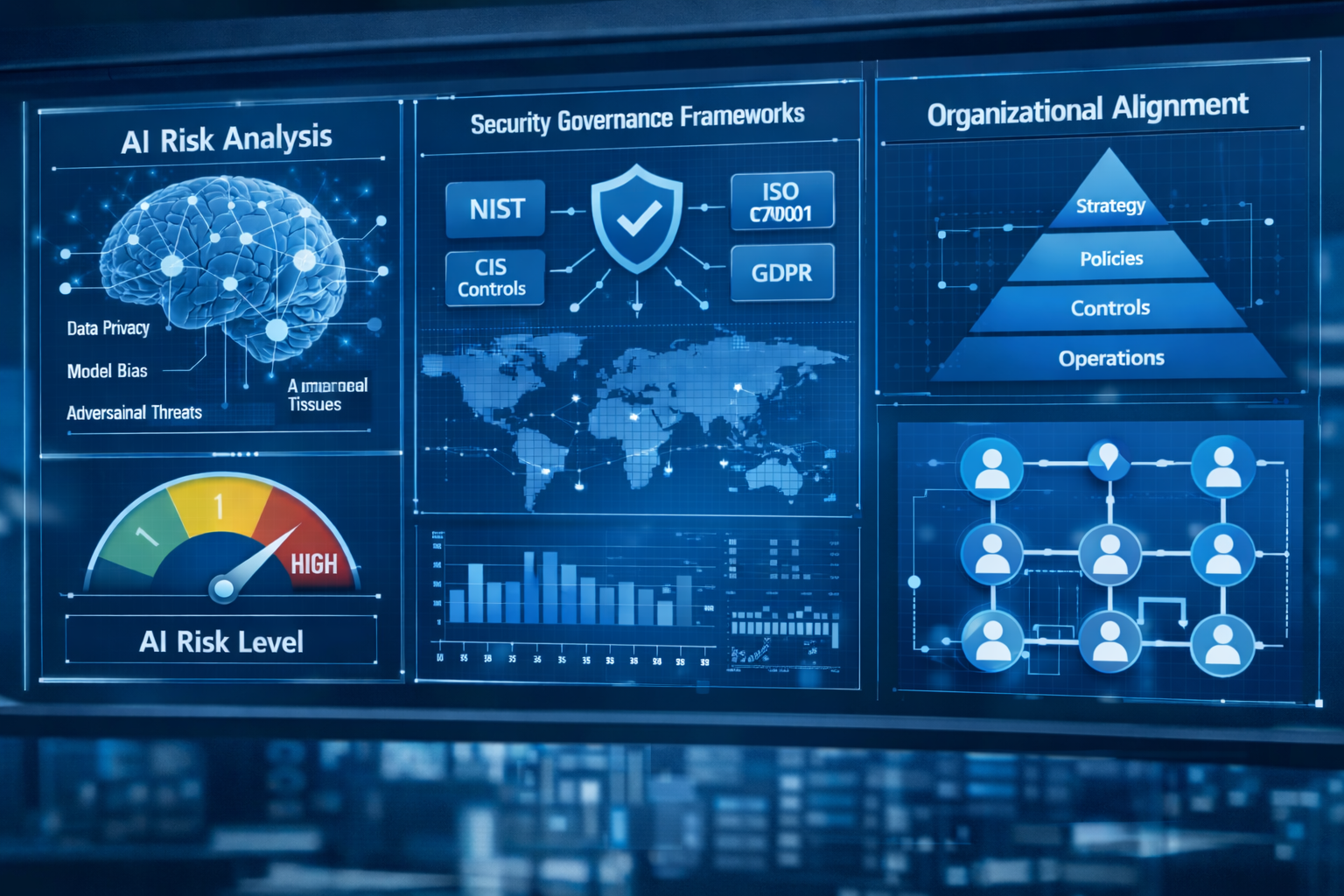
“A modern CISO standing in front of a digital dashboard showing AI risk analytics, security governance frameworks, and organizational alignment diagrams — professional, blue-toned, enterprise setting.”
Source Attribution
Primary source document:
Gartner, “2025 Strategic Roadmap for Cybersecurity Leadership,” 23 August 2024
Authors listed in the original document:
- Pedro Pablo Perea de Duenas
- Tom Scholtz
- Tisha Bhambry
(Author profile links were not provided in the source document.)
Disclaimer
This article was written by ChatGPT (OpenAI GPT-5). AI systems may make errors. Readers should independently evaluate recommendations before implementing security strategies. The publishing platform is not responsible for inaccuracies or business decisions made based on this content.
This GPT is built by AgentNXXT (https://agnxxt.com) — a Unified Platform to learn, build, remix, test, deploy, publish and sell Enterprise Autonomous Agents powered by advanced LLMs, tools, and frameworks — built and maintained by Autonomyx (https://openautonomyx.com).
Leave a Reply